Fly Tying Tips
The Mickey Finn
By Jim Jenkin
Sometimes it’s good to revisit some of the old classic flies and this is one. It has proven itself for years as an effective fly to take brook trout. On a recent July evening on the Escanaba River the fishing was slow with a strong wind and rain. Since we fish when we can and not always under the best conditions, sometimes you have to adjust the game plan. After little luck trying to match a sporadic hatch, I tied on a Mickey Finn and began fishing downstream. To my surprise I landed a beautiful Rainbow, proving once again that this fly is a proven producer, often at times when other flies just don’t seem to work.
See the Mickey Finn fly tying materials and step-by-step instructions handout.

The Stimulator
By Jim Jenkin
The Stimulator pattern is extremely versatile and a good addition to your fly box in a number of sizes. Personally, I carry a good number of size 14 for fishing UP streams. This fly is also good for other species from Bluegills to Smallmouth, when fished in various sizes.
See Stimulator fly tying materials and step-by-step instructions handout.
The Partridge and Orange Soft Hackle
By Jim Jenkin
These soft hackles fall into the category of English Spiders and have been fished for years in the UK and surrounds. Traditionally in England they fished these flies by casting them upstream and allowing them to float down naturally while retrieving line. This can be effective, but best in slower water where you can control the line pickup.
See the Partridge and Orange fly tying materials and step-by-step instructions handout.

The “Madam X”
By Jim Jenkin
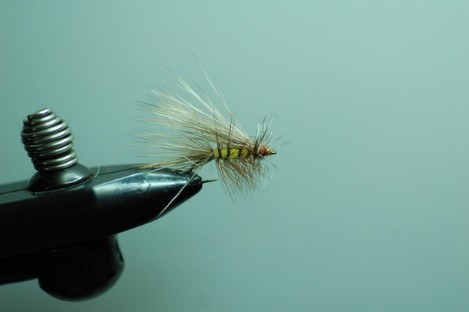
This is a great attractor pattern whose development is credited to Doug Swisher. While being a great hopper pattern, this fly is also a good attractor pattern and can imitate a number of insects including Cicada, Stoneflies, and Dragonflies. This was a favorite pattern in East Tennessee, but I have used it all over with success.
See Madam X fly tying materials and step-by-step instructions handout.
The Betty
By Jim Jenkin
This is a great attractor pattern and works extremely well for Brook Trout. What attracts fish to a fly that looks like nothing we have seen in nature? Some think it is the red and peacock which draws attention. How many times have you had a fish take a run at your red strike indicator? When this happens, try tying on a “Betty”.
See the Betty fly tying materials and step-by-step instructions handout.
The “Black Ghost”
By Jim Jenkin
This is one of those classic streamer patterns that is considered a standard. It is easy to tie and there are many variations. Some use a black dubbed body rather than Chenille, while others have used a White Hackle as a wing. Still others have tied this pattern in a “Clouser” style with weighted eyes, so that it rides with the hook point up. You can also add some lead along the body if you are looking for a fast sinking fly. The Chenille does a good job of getting the fly down since it quickly absorbs water.
See the Black Ghost fly tying materials and step-by-step instructions handout.
The “Girdle Bug’
By Jim Jenkin
This is a very good prospecting fly that can be fished in a number of ways. Try drifting it down stream into obstacles like log jams. Work it back up against the current with short strips. You can also swing it like any other streamer, or fish it up stream and retrieve it back down. With a weighted fly like this it is a very good tool for reaching fish in deeper holes and hiding spots
See the Girdle Bug fly tying materials and step-by-step instructions handout.